
Autumn Conservation Update
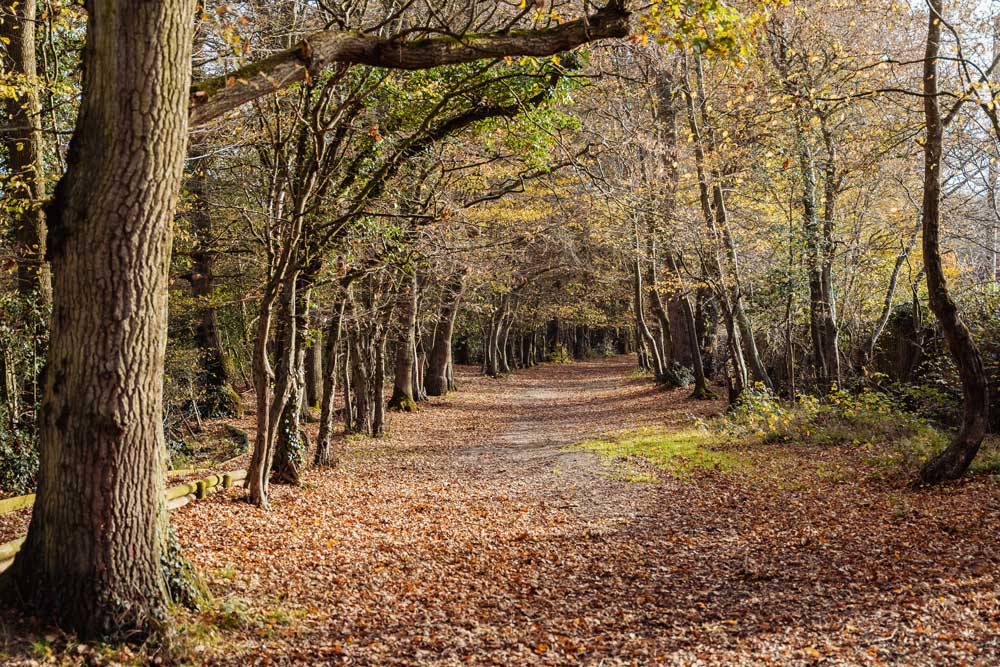
Having now settled into his new role, we have been chatting with Mark, our Environmental Conservation Officer, who has been busy exploring the farm and woodland. Here are some updates on his work focused on sustainable practices that work in harmony with the landscape at the Rare Breeds Centre.
Parsley Meadow wildflower restoration
Mark has recently taken over Parsley Meadow, a special wildflower meadow project that’s been running for about 20 years. Over time, the meadow has become overrun with knapweed, a tough meadow plant that is a member of the daisy family. It’s a great source of nectar for our pollinating insects and supports varied species, including butterflies, bees and beetles. But it’s now taken over a bit, and so the diversity of the meadow has taken a hit.
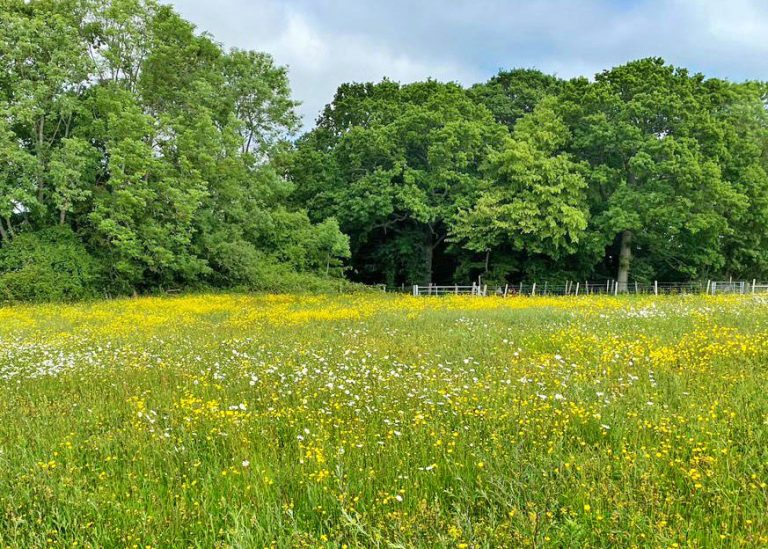
Parsley Meadow in the spring
Meadow restoration with the help of our rare breed sheep
As a first step in addressing the issue, Mark decided to let the farm’s rare breed sheep graze the meadow for a month over late summer. The sheep, with their natural preferences, expertly avoided the knapweed but they did consume a lot of grass. As a result, by late summer, there was far less grass to cut – just 7 bales compared to the usual 35!
This change made the cutting and baling faster, cheaper, and better for the environment. A traditional summer hay cut is essentially mimicking what grazing animals do naturally, and since we already have animals on the farm (which need to eat) this approach allows for a much more natural and sustainable way to care for the land and help it thrive.
Why using sheep is a much better choice
Less reliance on machinery is a good thing for many reasons, not just the most obvious ones like noise, pollution and fuel consumption. In this case, soil compaction, which is where heavy machinery “squashes” the soil. This is something we would like to avoid as much as possible as it means rainwater is more likely to just run off the soil rather than be absorbed. With our drier summers, due to climate change, it’s important we encourage what rainfall there is to be absorbed and to make good use of it.
After cutting the meadow, the sheep were brought back to graze again. Their grazing will mean we don’t have to cut the grass by machine again this year. Their gentle disturbance of the ground will also expose small patches of earth, and this will encourage some of the wildflowers that have been outcompeted by knapweed in recent years to flourish once more. A diverse pool of seeds is waiting patiently in the soil; they simply need a bit of light to be given a chance to thrive.
We can’t restore the meadow’s diversity overnight. But with a considered approach that benefits the farm in multiple ways, implemented consistently over time, we can encourage the many varied wildflowers to grow back naturally. Working in harmony with natural processes to help it do what it does best can create a wildflower meadow full of colour and life, providing food for our native species and habitats we can all enjoy.
Woodland management
We asked Mark about his approach to caring for woodland and he explained that even though our woods in the UK may look wild and natural, management of them has been an essential part of these environments for thousands of years. In many ways, we have “created” the woodlands around us over the centuries.
In the past, woodlands were managed carefully because people used the wood for things like tools, fencing, and fuel. But over the last 100–200 years, as people have stopped using these traditional products, many woodlands have been neglected. Unfortunately, without regular management to create a variety of habitats with a mixture of young and old plants, these “man-made” woodlands become overgrown and less diverse.
How we’re increasing our habitats
One of Mark’s plans is to make our main woodland paths, known as “rides”, more open. The additional space this creates with increased light reaching the woodland floor means various layers of vegetation can develop for all kinds of animals to inhabit. One of the important residents we have at the Rare Breeds Centre is the protected and elusive dormouse, shown below, who loves a bit of brambly scrub to scurry about in!
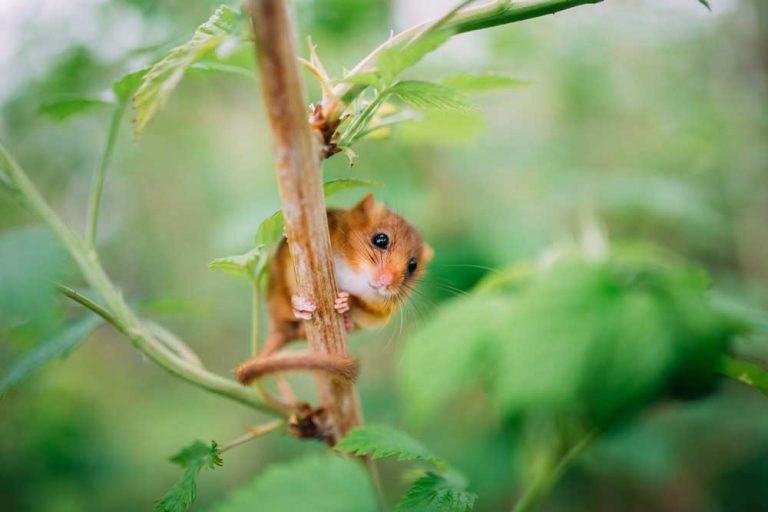
Dormouse
Woodland zones
The process of creating these rides starts with felling trees and cutting back vegetation to create several “zones”:
- First comes the path itself, which could be stone chip or simply a closely mown strip, that is easy to walk or drive down.
- Next comes what is called the herbaceous layer, which consists of grasses and small plants, and you may even spot the occasional wild orchid here.
- After this comes a shrub layer, small trees and, most likely, a decent amount of bramble.
- The final zone includes the taller trees that make up most of the woodland.
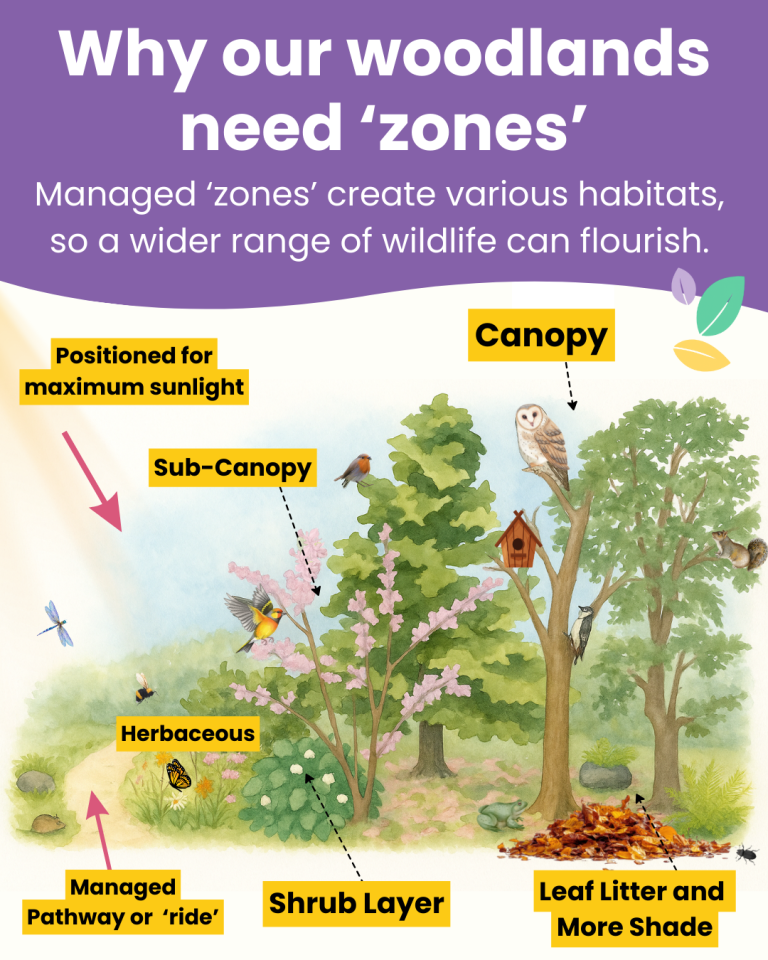
Woodland zones infographic
The woodland zone with the most biodiversity
Here’s an amazing fact: the number of species of plants and animals to be found in the first 10 metres of woodland, where there is a lot more light, is pretty much equal to the number you will find in the rest of the woodland put together! How’s that for biodiversity? It’s all down to that light and lots of different sizes and ages of plant. These sunny edges are great homes for butterflies, in particular. Although some butterflies prefer to be inside the woodland, you’ll see many more in the open spaces that surround or cut through it. By creating more of these bright, varied habitats, Mark can be sure to make the woodland an even better place for wildlife.
Woodland management is seasonal
Right now, Mark is working on something called “crown lifting,” which includes carefully removing the lower branches of some of the trees along the rides. This encourages the trees to put their energy into growing upwards into tall, healthy trees. This lets just a bit more sunlight reach the woodland floor, helping a few more flowers and smaller plants to grow. It’s like ride widening on a very small scale, but it all adds up.
Autumn and winter are the best times for this kind of work, as birds have finished nesting and the trees are resting for the season. Traditional woodland jobs, like coppicing (cutting some trees to encourage new shoots), have always been done in winter for the same reason, it keeps the wildlife safe and supports the trees’ natural cycle. By following the seasons and working with sympathy towards nature, Mark is helping the woodland be healthy, more diverse, and full of life.
How you can help and get involved
You can help us with these projects! If you would like to get involved with our conservation projects, either as an individual or part of a group, at the Rare Breeds Centre or Poulton Wood, please do get in contact with our volunteer coordinator. We’d love to hear from you!
Alternatively, if you’ve enjoyed visiting our woodland and would like to support our Accessibility Fundraiser, which helps fund improved signage across the farm and woodland, you can find out more and donate here!
Share


