
Don’t Miss the Rare Breeds Centre on Blue Peter!
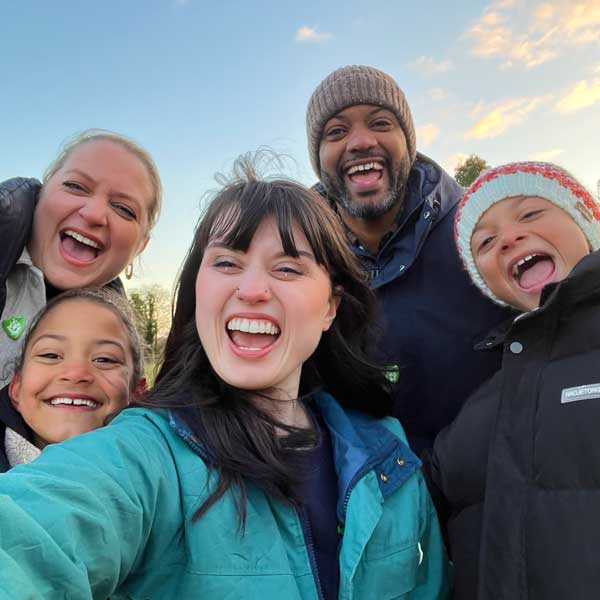
Tune in to Blue Peter on Friday 20th February to see the Rare Breeds Centre in the spotlight! Special guest JB Gill from JLS will be joining us with his family as they try their hand at being farmers on our farm, alongside Blue Peter’s very own Abby Cook!
Catch the episode on CBBC at 5pm, or watch it on iPlayer for up to 30 days afterwards!
You can enjoy some of the same activities enjoyed by Abby, JLS and his family on the farm including taking our wheelchair accessible trailer rides, visiting the Children’s Barn and seeing our lambs and other baby animals! Plus much more!
Behind the scenes pictures
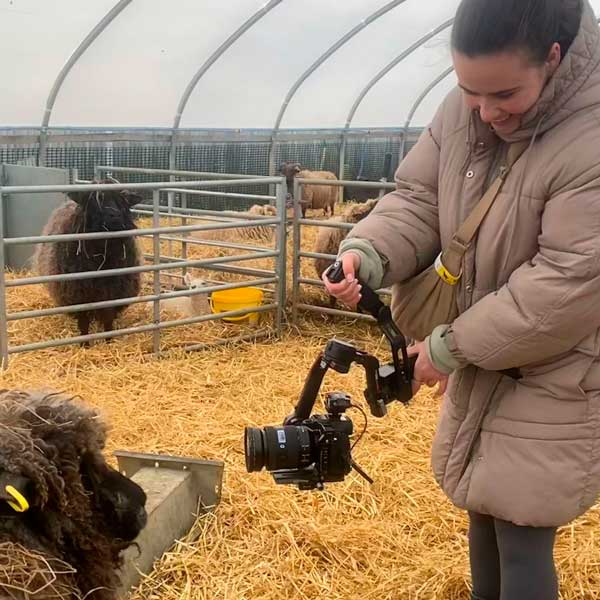
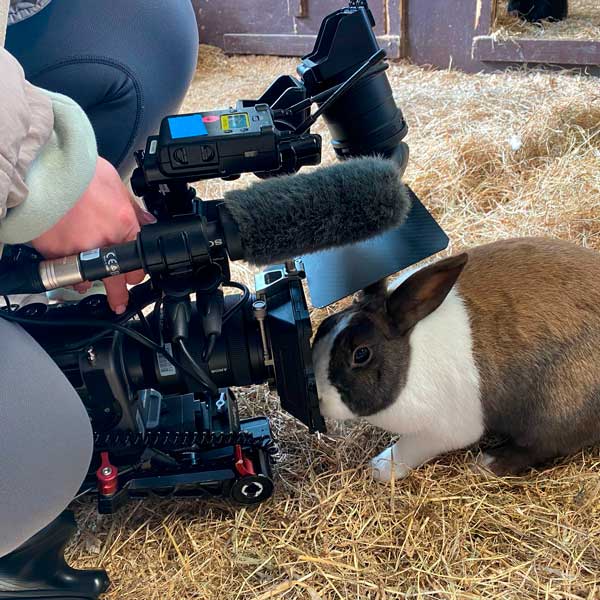
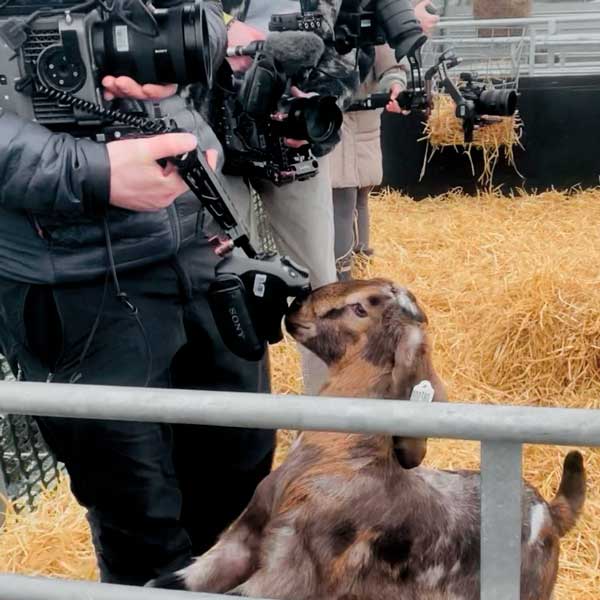
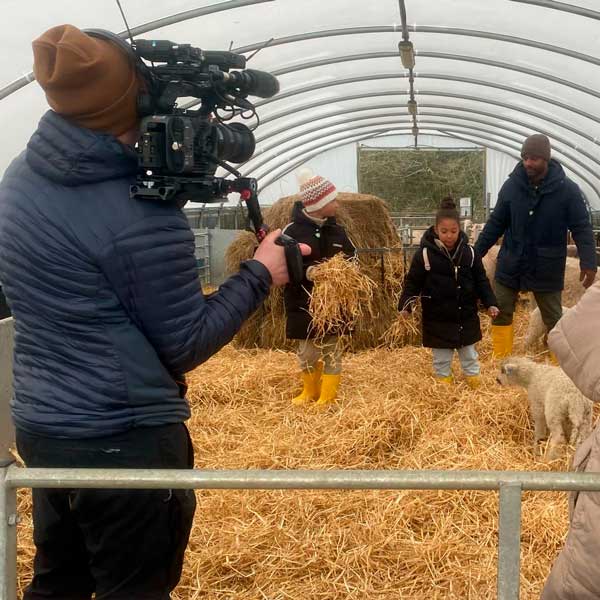
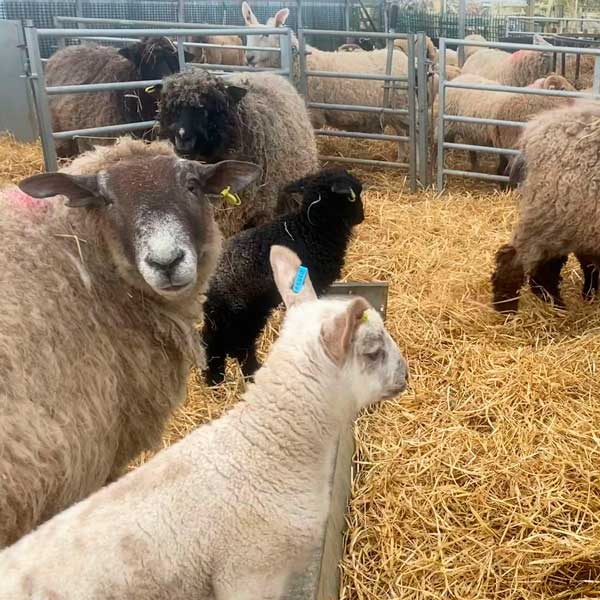
See some photos below of the episode being filmed on the farm. Our animals were very interested in the camera crew 😀
National Apprenticeship Week
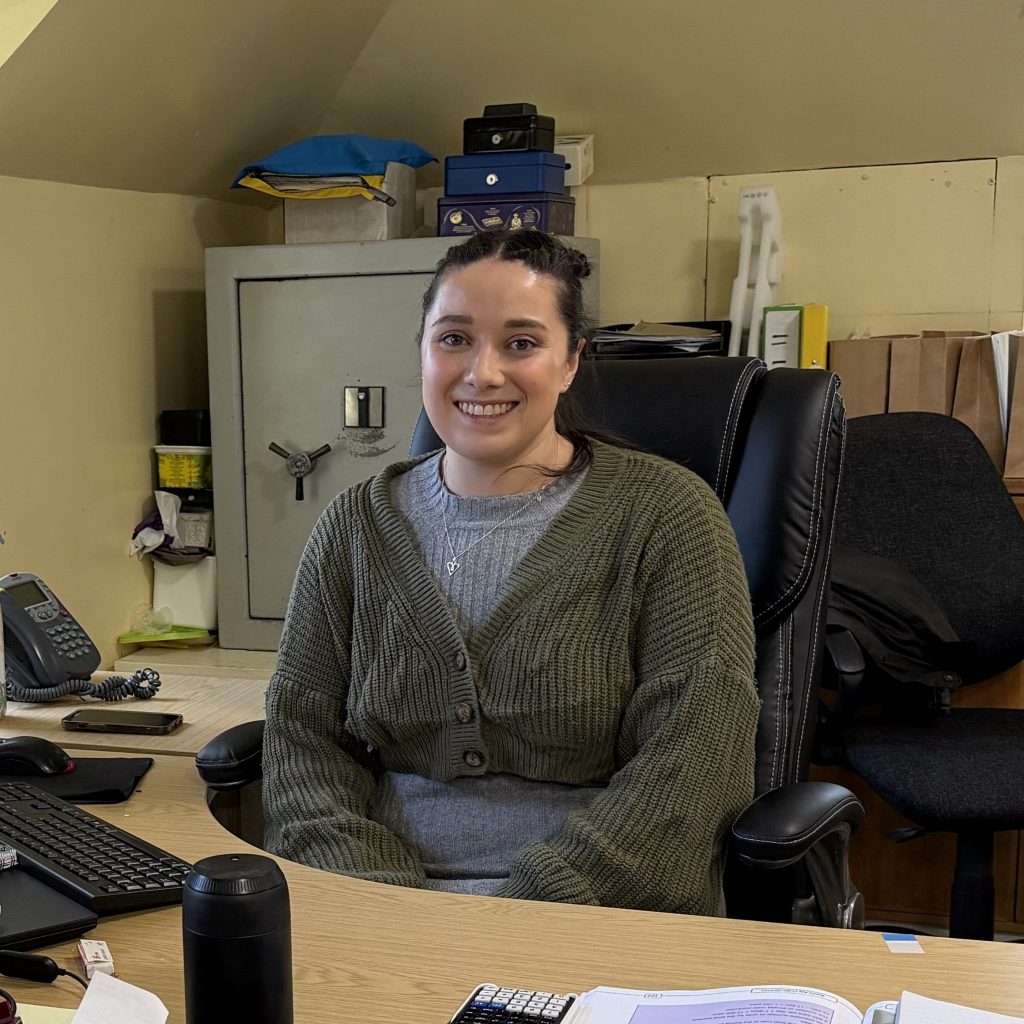
An Interview with Katrina our Finance Administrator
We are celebrating National Apprenticeship Week here at Canterbury Oast Trust, a week-long celebration that brings together businesses and apprentices across the country to shine a light on the positive impact that apprenticeships make to individuals, businesses and the wider economy.
We have already started the celebrations with a drop in session for our staff to learn more about apprenticeships on Monday and celebrated our managers on Tuesday who take on apprenticeships alongside their busy schedules to keep learning and improving their skills. We will be continuing to celebrate the week on our Facebook and Instagram pages so make sure to check that out! Today, we’re excited to introduce a new apprentice who has recently joined COT. We caught up with her to find out how her journey becoming an apprentice has been going so far.
How did you find the process of becoming an apprentice here at COT?
I found the process of becoming an apprentice at COT to be clear and supportive. Throughout the application and interview stages, my line manager and HR took the time to explain the different options and training providers available to me. Once I was successful, I was given a shortlist of both in-person and online providers with different start dates, which allowed me to choose what suited me best. Everyone I spoke to during the process was friendly, approachable, and happy to help.
How do you feel now you have started?
Since starting my apprenticeship, I feel much more confident. Spending a few weeks working within the finance department before beginning my AAT qualification really helped me settle in. It allowed me to understand my role better and made me feel more comfortable when I started my first online classroom sessions.
What kind of support have you found most helpful since joining?
The support from my line manager and colleagues has been extremely helpful. Knowing that I can ask questions at any time and have things explained clearly has made a big difference. Being surrounded by people with a wide range of experience has helped me learn and develop my understanding much faster.
What skills are you hoping to develop as part of this apprenticeship?
Through this apprenticeship, I hope to build my knowledge of finance and gain a better understanding of financial terminology. I also want to improve my confidence in the workplace, gain practical experience, and develop professional skills that will support me in my future career in finance.
What motivated you to choose an apprenticeship here at COT?
I chose an apprenticeship at COT because it offered the opportunity to learn while working towards a qualification. I was also drawn to the supportive environment and the chance to gain real, hands-on experience while developing both personally and professionally.
Access Action Raffle
For Dignity Action Month, we are launching our Access Action prize raffle to help us make our farm accessible to people with a wide range of disabilities. Many of these accessibility features help to maintain personal dignity for people with complex needs while visiting our farm. By entering our Access Action prize raffle, you could win all of these fantastic prizes while supporting our important plans for inclusion at the Rare Breeds Centre:
Some amazing businesses and individuals have contributed prizes worth over £1000 to help raise funds for our accessibility fundraiser. One lucky winner will win all prizes for these fantastic products and experiences or they can choose to give them as gifts to friends and family:
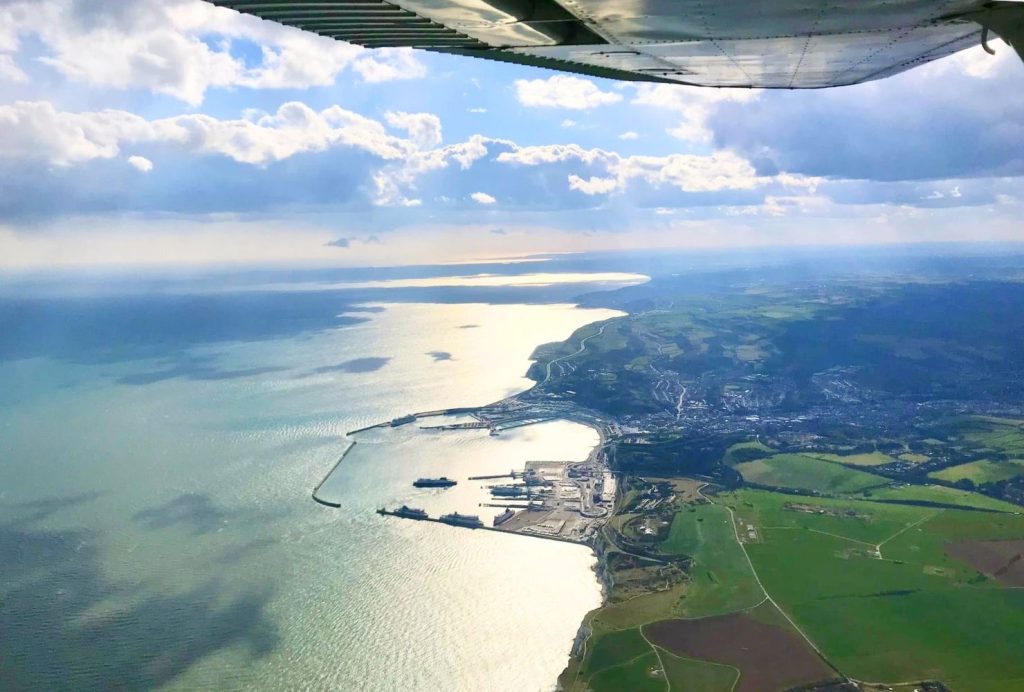
- 45-minute exclusive scenic flight over Kent for up to 2 people
- A beautiful, light-weight fine wool Margo Selby scarf
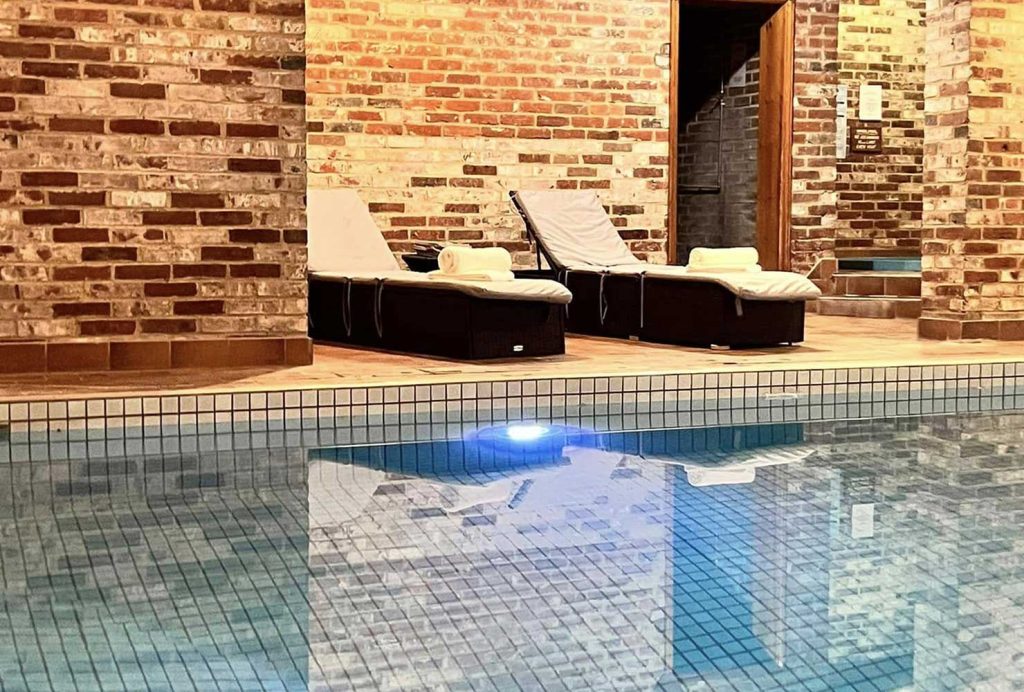
- Flackley Ash Country House Hotel health club day pass for 2
- A £50 meal voucher for the Woolpack inn, Warehorne, a beautiful 16th-century inn near the Rare Breeds Centre.
- Harry Baker (world poetry slam champion) spoken word performance London tickets for 2 plus signed book
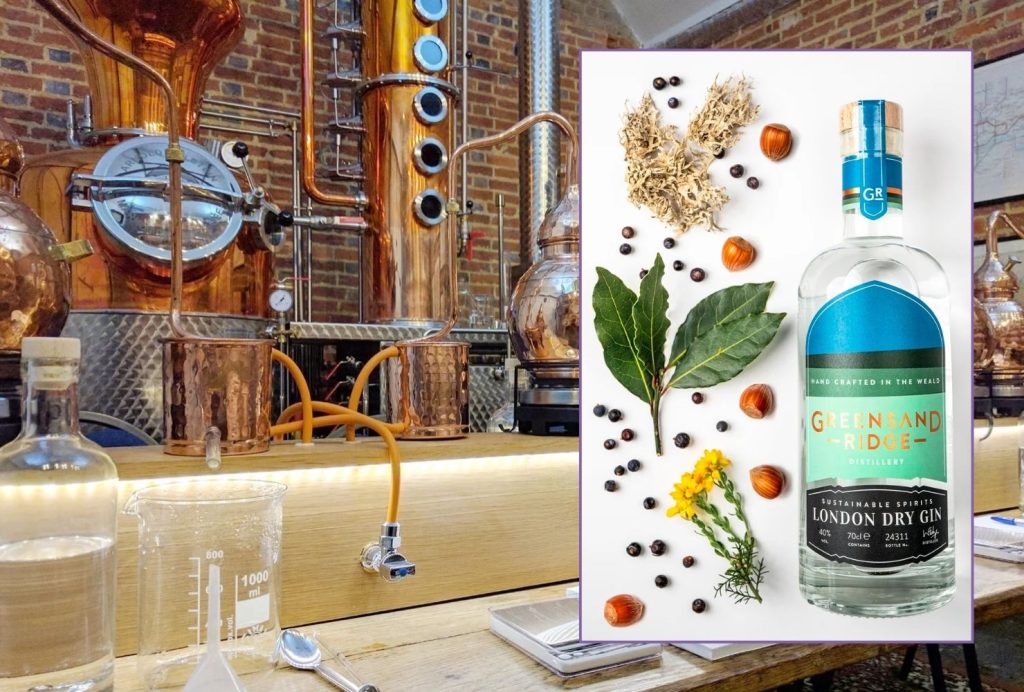
- 2 bottles of Greensand Ridge London dry gin from this award-winning distillery in Kent
- 3 cases (36 bottles) of International Wine Challenge wine – a variety of reds
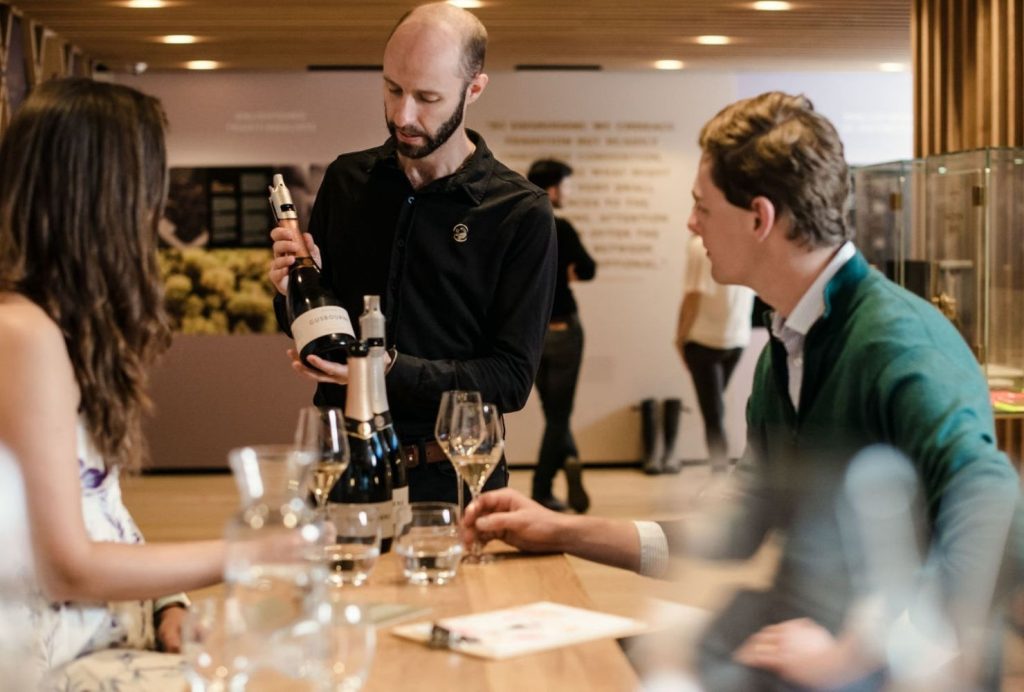
- Sparkling wine flight tasting at Gusbourne Wines – the only three-time winner of the IWSC English Wine Producer of the Year.
- An annual membership to English Heritage.
The raffle starts today and ends on 28th February at 5:00 pm GMT. One winner will be announced on Monday 2nd March and must be able to travel to the Rare Breeds Centre, Highlands Farm, Ashford, Kent TN26 3RJ to pick up their amazing prizes! Please share the raffle with your friends and family to help us
Each ticket is just £4 for all of these amazing prizes!
You can find out more about our accessibility plans on our JustGiving page.





Autumn Conservation Update
Having now settled into his new role, we have been chatting with Mark, our Environmental Conservation Officer, who has been busy exploring the farm and woodland. Here are some updates on his work focused on sustainable practices that work in harmony with the landscape at the Rare Breeds Centre.
Parsley Meadow wildflower restoration
Mark has recently taken over Parsley Meadow, a special wildflower meadow project that’s been running for about 20 years. Over time, the meadow has become overrun with knapweed, a tough meadow plant that is a member of the daisy family. It’s a great source of nectar for our pollinating insects and supports varied species, including butterflies, bees and beetles. But it’s now taken over a bit, and so the diversity of the meadow has taken a hit.
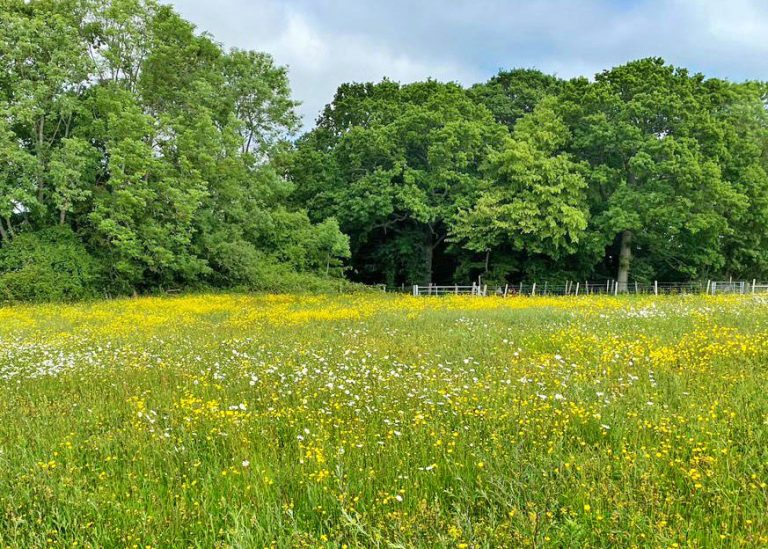
Parsley Meadow in the spring
Meadow restoration with the help of our rare breed sheep
As a first step in addressing the issue, Mark decided to let the farm’s rare breed sheep graze the meadow for a month over late summer. The sheep, with their natural preferences, expertly avoided the knapweed but they did consume a lot of grass. As a result, by late summer, there was far less grass to cut – just 7 bales compared to the usual 35!
This change made the cutting and baling faster, cheaper, and better for the environment. A traditional summer hay cut is essentially mimicking what grazing animals do naturally, and since we already have animals on the farm (which need to eat) this approach allows for a much more natural and sustainable way to care for the land and help it thrive.
Why using sheep is a much better choice
Less reliance on machinery is a good thing for many reasons, not just the most obvious ones like noise, pollution and fuel consumption. In this case, soil compaction, which is where heavy machinery “squashes” the soil. This is something we would like to avoid as much as possible as it means rainwater is more likely to just run off the soil rather than be absorbed. With our drier summers, due to climate change, it’s important we encourage what rainfall there is to be absorbed and to make good use of it.
After cutting the meadow, the sheep were brought back to graze again. Their grazing will mean we don’t have to cut the grass by machine again this year. Their gentle disturbance of the ground will also expose small patches of earth, and this will encourage some of the wildflowers that have been outcompeted by knapweed in recent years to flourish once more. A diverse pool of seeds is waiting patiently in the soil; they simply need a bit of light to be given a chance to thrive.
We can’t restore the meadow’s diversity overnight. But with a considered approach that benefits the farm in multiple ways, implemented consistently over time, we can encourage the many varied wildflowers to grow back naturally. Working in harmony with natural processes to help it do what it does best can create a wildflower meadow full of colour and life, providing food for our native species and habitats we can all enjoy.
Woodland management
We asked Mark about his approach to caring for woodland and he explained that even though our woods in the UK may look wild and natural, management of them has been an essential part of these environments for thousands of years. In many ways, we have “created” the woodlands around us over the centuries.
In the past, woodlands were managed carefully because people used the wood for things like tools, fencing, and fuel. But over the last 100–200 years, as people have stopped using these traditional products, many woodlands have been neglected. Unfortunately, without regular management to create a variety of habitats with a mixture of young and old plants, these “man-made” woodlands become overgrown and less diverse.
How we’re increasing our habitats
One of Mark’s plans is to make our main woodland paths, known as “rides”, more open. The additional space this creates with increased light reaching the woodland floor means various layers of vegetation can develop for all kinds of animals to inhabit. One of the important residents we have at the Rare Breeds Centre is the protected and elusive dormouse, shown below, who loves a bit of brambly scrub to scurry about in!
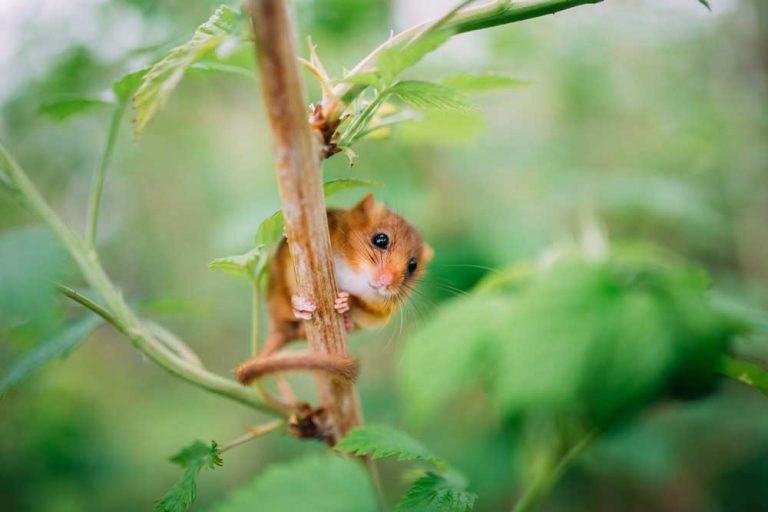
Dormouse
Woodland zones
The process of creating these rides starts with felling trees and cutting back vegetation to create several “zones”:
- First comes the path itself, which could be stone chip or simply a closely mown strip, that is easy to walk or drive down.
- Next comes what is called the herbaceous layer, which consists of grasses and small plants, and you may even spot the occasional wild orchid here.
- After this comes a shrub layer, small trees and, most likely, a decent amount of bramble.
- The final zone includes the taller trees that make up most of the woodland.
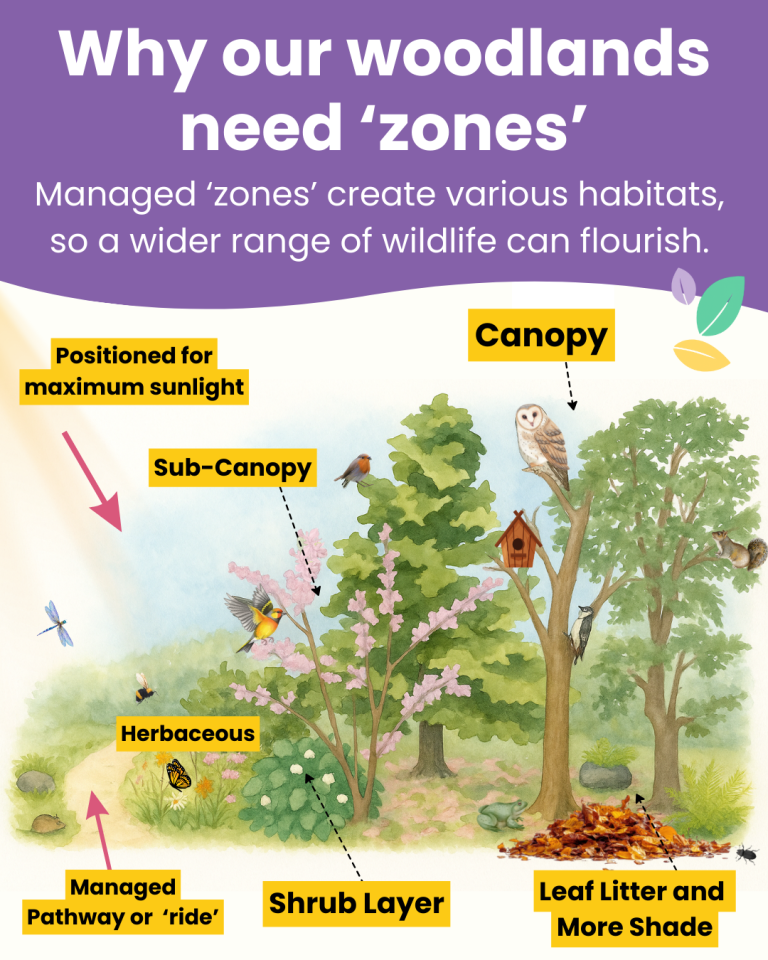
Woodland zones infographic
The woodland zone with the most biodiversity
Here’s an amazing fact: the number of species of plants and animals to be found in the first 10 metres of woodland, where there is a lot more light, is pretty much equal to the number you will find in the rest of the woodland put together! How’s that for biodiversity? It’s all down to that light and lots of different sizes and ages of plant. These sunny edges are great homes for butterflies, in particular. Although some butterflies prefer to be inside the woodland, you’ll see many more in the open spaces that surround or cut through it. By creating more of these bright, varied habitats, Mark can be sure to make the woodland an even better place for wildlife.
Woodland management is seasonal
Right now, Mark is working on something called “crown lifting,” which includes carefully removing the lower branches of some of the trees along the rides. This encourages the trees to put their energy into growing upwards into tall, healthy trees. This lets just a bit more sunlight reach the woodland floor, helping a few more flowers and smaller plants to grow. It’s like ride widening on a very small scale, but it all adds up.
Autumn and winter are the best times for this kind of work, as birds have finished nesting and the trees are resting for the season. Traditional woodland jobs, like coppicing (cutting some trees to encourage new shoots), have always been done in winter for the same reason, it keeps the wildlife safe and supports the trees’ natural cycle. By following the seasons and working with sympathy towards nature, Mark is helping the woodland be healthy, more diverse, and full of life.
How you can help and get involved
You can help us with these projects! If you would like to get involved with our conservation projects, either as an individual or part of a group, at the Rare Breeds Centre or Poulton Wood, please do get in contact with our volunteer coordinator. We’d love to hear from you!
Alternatively, if you’ve enjoyed visiting our woodland and would like to support our Accessibility Fundraiser, which helps fund improved signage across the farm and woodland, you can find out more and donate here!
Wildlife Conservation Day 2025
Happy Wildlife Conservation Day! We caught up with Mark, our Conservation and Environment Officer, to hear about the exciting wildlife conservation projects he’s working on now and what he has planned for the future.
An important part of our Woodland Management Plan we are working on now will be its provision for one of our many species of furry friend we have at Rare Breeds Centre – the Hazel Dormouse. The name is a little misleading, as the important European Protected Species doesn’t rely specifically on hazel trees too much, but it comes from the fact the structure of hazel woodland that is coppiced on a relatively short rotation often makes for their ideal habitat.
When hazel is coppiced, which means to harvest it and encourage healthy new growth, more light is allowed to reach the woodland floor, and a diverse mosaic of trees, flowering plants, grasses and brambles springs to life. Throw a few native small trees into the mix, like the blackthorn, dogwood, field maple, guelder rose and spindle that thrive in many a Kent hedgerow, and you have a scrubby hotchpotch with plenty of the nuts, seeds, berries, flowers and insects that dormice love to eat. The important things here are plenty of cover and plenty of food.
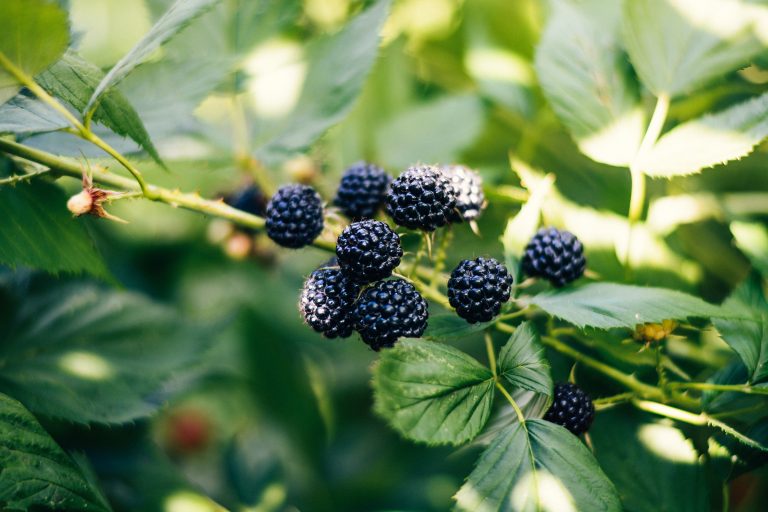
Blackberries are one type of bramble that grows in hedgerows
It should then come as no surprise that dormice also love hedgerows, as the structure of these is very similar to coppiced woodland in many ways. A nice wide pathway or woodland glade also make for great dormouse habitat. The key to improving our dormouse population is to ensure we have plenty of all these habitats, and most importantly they all need to be joined up; connectivity is key. The reduction in traditional long-term woodland and hedgerow management is one of the main reasons why dormouse numbers in the UK have fallen by more than half over the last 15 years. We need to put this right!
On a walk-around with our resident dormouse expert towards the end of last summer I was encouraged to hear there is great potential for us to improve our dormouse numbers here at Rare Breeds Centre. Many aspects of our Woodland Management Plan that we hope we will have in place around this time next year, such as woodland thinning and traditional practices such as hedge laying, will in themselves be beneficial for dormice. If we go out of our way to ensure these things are all linked together in a dormouse-friendly way, with additional habitat creation thrown into the mix as well, then things look very promising. On that note, I’ll be planting a few native hedgerow trees this week, all the time daydreaming about how they may one day make a suitable home for some of our precious dormouse residents.
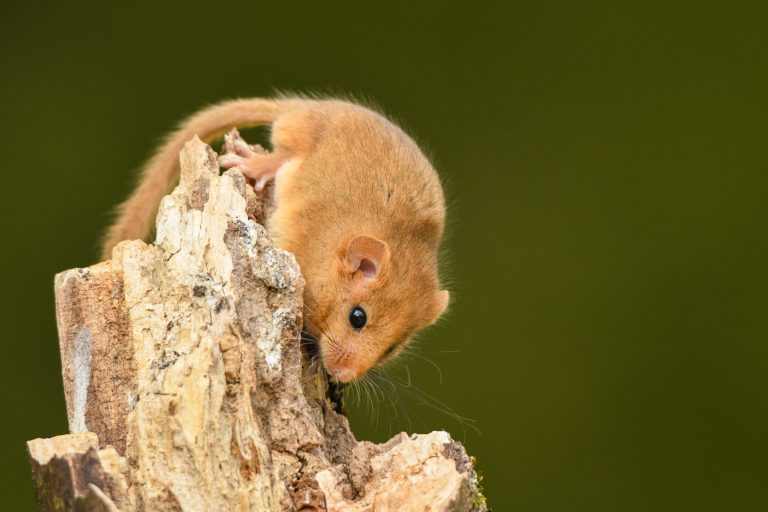
A Hazel Dormouse
A recap of how we celebrated National Safeguarding Adults Week
Last week we celebrated National Safeguarding Adults Week we used this opportunity to raise awareness and strengthen our commitment to safeguarding across COT and the Rare Breeds Centre. We hosted a series of events and activities for our staff, volunteers, supported people and Rare Breeds Centre visitors. These activities were all designed to help learn, share and stay informed about best practices in safeguarding.
Monday:
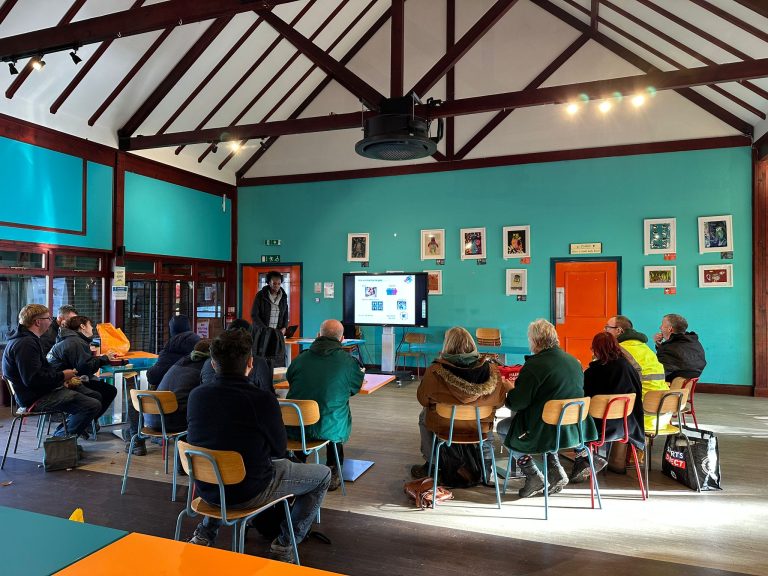
We kicked off the week with a visit from Angela from the Jigsaw Project within the Choice Support team. She led a great session on hate crimes with the people we support. Talking about what hate crimes are, reasons why someone may be targeted, where incidents could occur and who to turn to for support and advice. She then finished the session with a fun quiz to get everyone thinking about what they had just learnt.
Tuesday:
On Tuesday we had a busy day filled with insightful talks. The day started with welcoming a local police officer speaking with the people we support about personal safety and where to find help if needed. He shared practical tips on staying safe in different situations and knowing when and how to seek support.
Later in the day our Director of Quality and Change Katie, delivered a great session on Prevention in Practice to our staff and volunteers. Ensuring our team stays up to date with best safeguarding practices.
Wednesday:
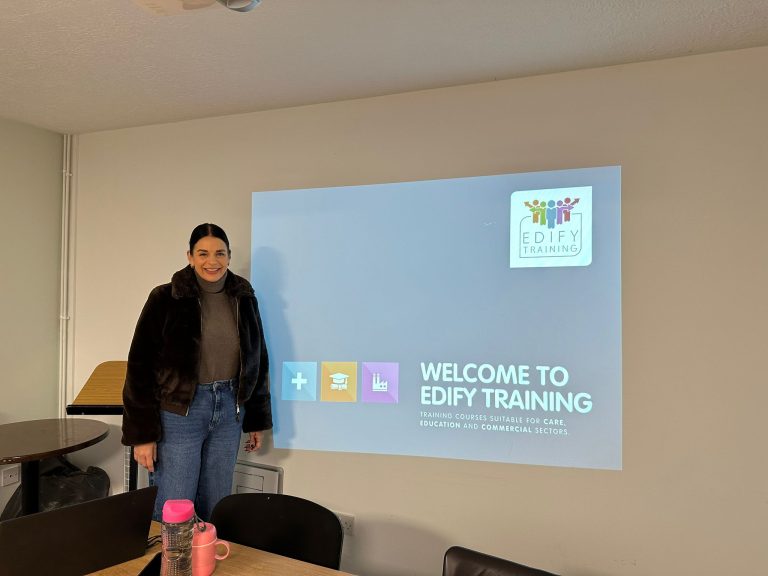
On Wednesday we invited Edify Training to speak with our staff and volunteers about Creating Empowering Environments. Which involved teaching our team about promoting independence for our supported people with a strong emphasis on a person centered approach, discussing potential barriers and the importance of enabling choice, dignity and control in daily living. A really insightful session that our team found very helpful!
Thursday:
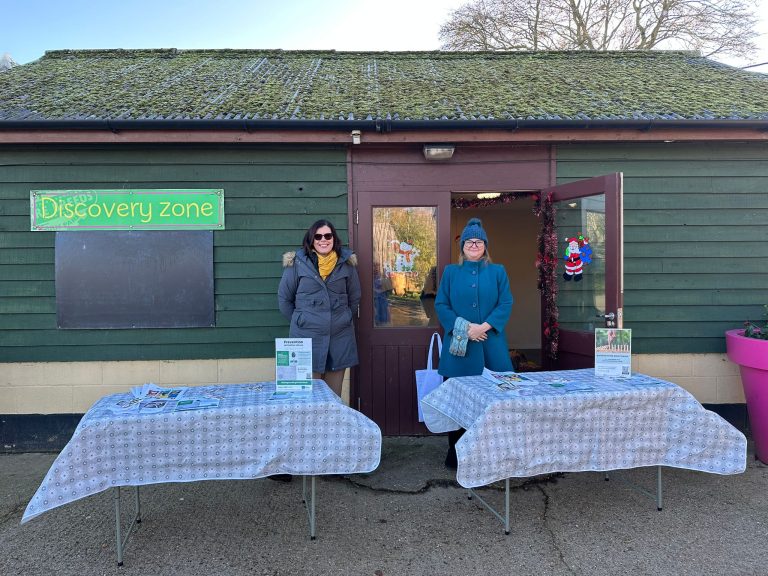
On this day, staff came together to help inform Rare Breeds Centre visitors about Safeguarding and National Safeguarding Adults Week. They spoke with the visitors and raised awareness of safeguarding for both adults and children highlighting the importance of speaking up if they have concerns about someone and who to contact for support.
Friday:
As the week came to an end we hosted a resources stand for staff that was filled with leaflets, posters and QR codes linked to further resources. It offered a round up of everything that had been learnt, discussed and put into practice over the week and more!

For more information on National Safeguarding Adults Week, you can visit the Ann Craft website: https://www.anncrafttrust.org/…/safeguarding-adults-week/
Over £1,000 in Prizes Donated to Support 40th Anniversary Accessibility Fundraiser
Ruby Jubilee Raffle UPDATE
We’ve paused the Ruby Jubilee Raffle after identifying an issue in our online setup. To be safe and fair to everyone, we’re refunding all tickets and will not conduct a draw.
- Online purchases: refunds will be returned to the original payment method; timing updates will follow here.
- In‑person purchases (Christmas Gift Market or Rare Breeds Centre gift shop): visit the gift shop or call 01233 861493 (ext. 241) to arrange a secure refund.
We’ll relaunch a corrected raffle early next year with the same prize bundle—please check back for the date. Thank you for supporting our Farm Accessibility Fundraiser.
In celebration of our 40th anniversary, we’re launching a special fundraising raffle in support of our ambitious accessibility expansion campaign aimed at making the Rare Breeds Centre welcoming and inclusive for visitors of all abilities. To help reach this goal, nine generous local businesses and individuals have donated over £1,000 worth of prizes.
One lucky winner will take home the entire prize bundle of experiences and luxury products.
The prize package includes |
|---|
| An exclusive 45-minute scenic flight over Kent for up to 2 people |
| A beautiful fine wool Margo Selby scarf – light-weight and elegantly designed |
| Flackley Ash Country House Hotel health club day pass for 2 |
| A £50 meal voucher for The Woolpack Inn, Warehorne, a charming 16th-century inn |
| Harry Baker live performance tickets for 2 in London, plus a signed book from the world poetry slam champion |
| 2 bottles of Greensand Ridge London Dry Gin from Kent’s award-winning distillery |
| 18 holes of golf for 4 at Chart Hills Golf Club, a championship course designed by Sir Nick Faldo |
| 3 cases (36 bottles) of International Wine Challenge-winning wines, a mix of reds and whites |
| A sparkling wine flight tasting at Gusbourne Wines, 3-time winner of the IWSC English Wine Producer of the Year |
The grand prize winner will be announced live at our Christmas Grotto on 23rd December 2025 at 6:45 pm.
Supporting accessibility for everyone
Funds raised through this raffle will directly support our farm accessibility plan, which aims to make our entire site welcoming and inclusive for visitors with a wide variety of disabilities. Through these initiatives, COT aims to create an inclusive environment where everyone can explore, play, and connect regardless of ability.
Community Support and Thanks
Huge thanks and deep gratitude to the businesses and individuals who have contributed prizes to the raffle. Their generosity reflects the strong community spirit that has supported the organisation throughout its 40-year history.
- Margo Selby
- Flackley Ash Hotel
- The Woolpack Inn, Warehorne
- Harry Baker
- Greensand Ridge Distillery
- Chart Hills Golf Club
- International Wine Challenge
- Gusbourne Wines
Celebrating Purple Tuesday: Our Commitment to Accessibility
Today, 4th November, marks Purple Tuesday, a global initiative encouraging organisations to recognise, understand, and take meaningful action to improve accessibility for all.
At the Rare Breeds Centre, we’re proud to support this movement and to highlight the steps we’re taking to make both our website and farm more inclusive, reflecting our ongoing commitment to our mission and vision.
A More Accessible Website
We’ve been working hard to make sure our website is as accessible as possible for everyone! We’re delighted to now offer the Recite Me Assistive Toolbar, which helps make our website inclusive and easy to use for a wide variety of special needs.
This handy tool allows you to customise your online experience by:
- Adjusting text size, colours, and fonts
- Using a screen reader or reading aids
- Translating content into multiple languages
The toolbar helps individuals enjoy an online experience that works for them, including those who are neurodivergent, visually impaired, speak English as a second language, or anyone who needs a more tailored online experience.
Improving Accessibility on the Farm
Accessibility is just as important across the farm. In November 2023 we obtained funding for an accessible trailer, allowing one wheelchair user to enjoy a tour of the farm on each trip. Our next step was to welcome the team from Accessible UK, to provide an accessibility audit to help us identify ways we can continue improving.
Based on the audit’s findings and recommendations, and in honour of our 40th anniversary, we’ve launched an accessibility fundraiser to help us make the entire farm accessible to a wide range of visitors. Some of our future plans include:
- Installing more wheelchair accessible playground equipment
- Creating a changing places facility, allowing wheelchair users to access bathroom facilities with dignity and independence
- Setting up calm and quiet spaces to support visitors with sensory sensitivities
- Providing ear defenders and sensory backpacks for use around the farm
- Developing large print, Braille, and easy-read information guides
We’re excited to continue our journey toward a fully inclusive experience, both online and on the farm, so that everyone can access and enjoy the wide range of activities and events offered by the Rare Breeds Centre.
International Day of Charity 2025
We are celebrating International Day of Charity
On 5th September, we join the world in celebrating International Day of Charity. It’s the perfect moment to reflect on and share the incredible things happening across COT this year!
For those just discovering COT, we’re the organisation that operates the Rare Breeds Centre. COT currently supports around 170 adults with learning disabilities and/or autism, across our accommodation services and Life Skills programmes.
Set up in 1985 by a group of parents who wished for their adult children to have the opportunity to live their own independent lives. COT has grown steadily over succeeding years to become one of the most groundbreaking and respected providers of accommodation and support for people with a learning disability in Kent.
This year is especially meaningful for COT as we mark a remarkable milestone, our Ruby Jubilee, celebrating 40 years of making a difference as a registered charity.
To mark the occasion we are holding a three day music festival, dreamed up by our supported people! It’s a tribute to the incredible innovations of our founding parents and supporters and the decades of dedication that have brought us here.
COT has also been named a finalist in the Large Charity of the Year category at the Kent Charity Awards! As part of the judging process, the panel visited the Rare Breeds Centre, where they met with our Senior Management Team and a few of the people we support. We were proud to share the amazing achievements of COT over the past year, along with some exciting plans for the future. The visit also gave us the chance to highlight the creativity and talent of our Art at the Farm students.
To make this year even more special, a few of our Care Team staff members have been nominated and are proud KiCA Award finalists! We’re thrilled to celebrate Lisa in the Ancillary Worker category and Anoop in the Care Newcomer category. Both Lisa and Anoop are exceptional members of our team, consistently going above and beyond to deliver the highest level of care to the people we support.
A well-deserved mention for Beth, Vicky, and James, who were also nominated. Every member of our team plays a vital part in making a meaningful, positive impact on the lives of the people we support, and that’s what makes COT so special.
To keep up to date with all the exciting things going on around the trust follow our Facebook, Instagram or LinkedIn pages.
Among the many amazing people who make COT what it is, our incredible volunteers truly stand out. We’re so fortunate to have them on our team, some have been with us for years, while others have only recently joined. No matter how long they’ve been with us, each volunteer plays a vital role and makes a huge difference to the services they support.
We’re always looking for enthusiastic volunteers to join us across all our services, whether it’s on the farm, in our training kitchen, at the academy, or with Art on the Farm. We’re also currently seeking events volunteers ideal for those who want to get involved but may not be able to commit to weekly hours, as these opportunities occur once every few months.
To learn more about volunteering with us please contact our volunteer coordinator Paul Harris on paul.harris@canterburyoasttrust.org.uk
Big Butterfly Count at Poulton Wood
10 years of participation
Our Poulton Wood rangers (life skills students) have been taking part in the Big Butterfly Count for around 10 years now in our beautiful, ancient woodland. Each year, they dedicate a full week to surveying butterflies daily across a variety of habitats including the garden, meadow, and woodland, to ensure a rich and diverse snapshot of local species.
So far this year, they’ve completed their first survey and were excited to spot a Common Blue Butterfly in the meadow, along with a good variety of other species. Over the years, their records show a number of more unusual sightings as well, highlighting the importance of consistent monitoring.
Our rangers have recently started working on their AQA Unit Award Scheme for Introduction to UK Butterflies.
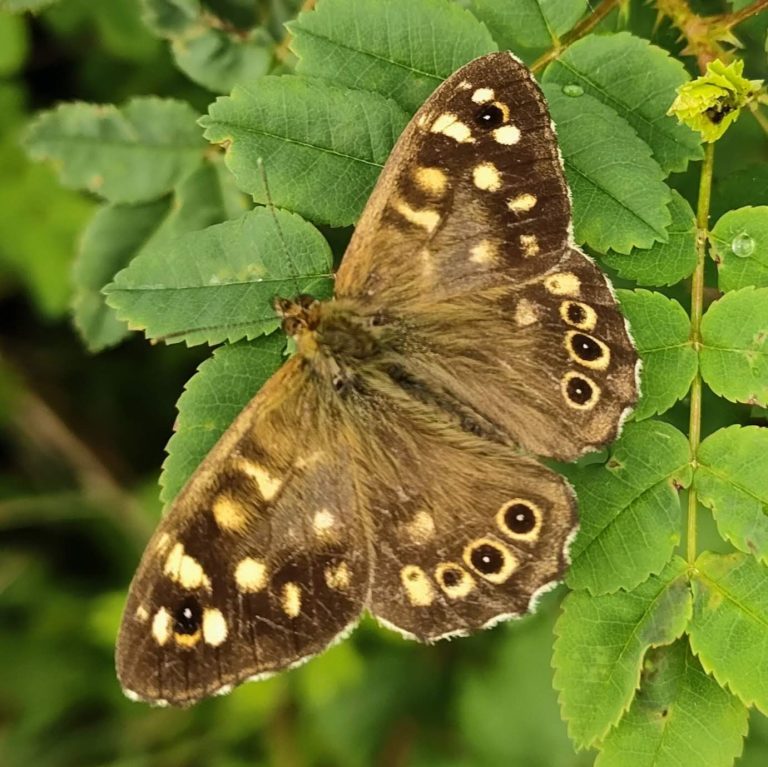
Pictured above is the Speckled Wood Butterfly, often seen spiralling in vertical displays through the woodland as they compete for territory.
Integrating research and art
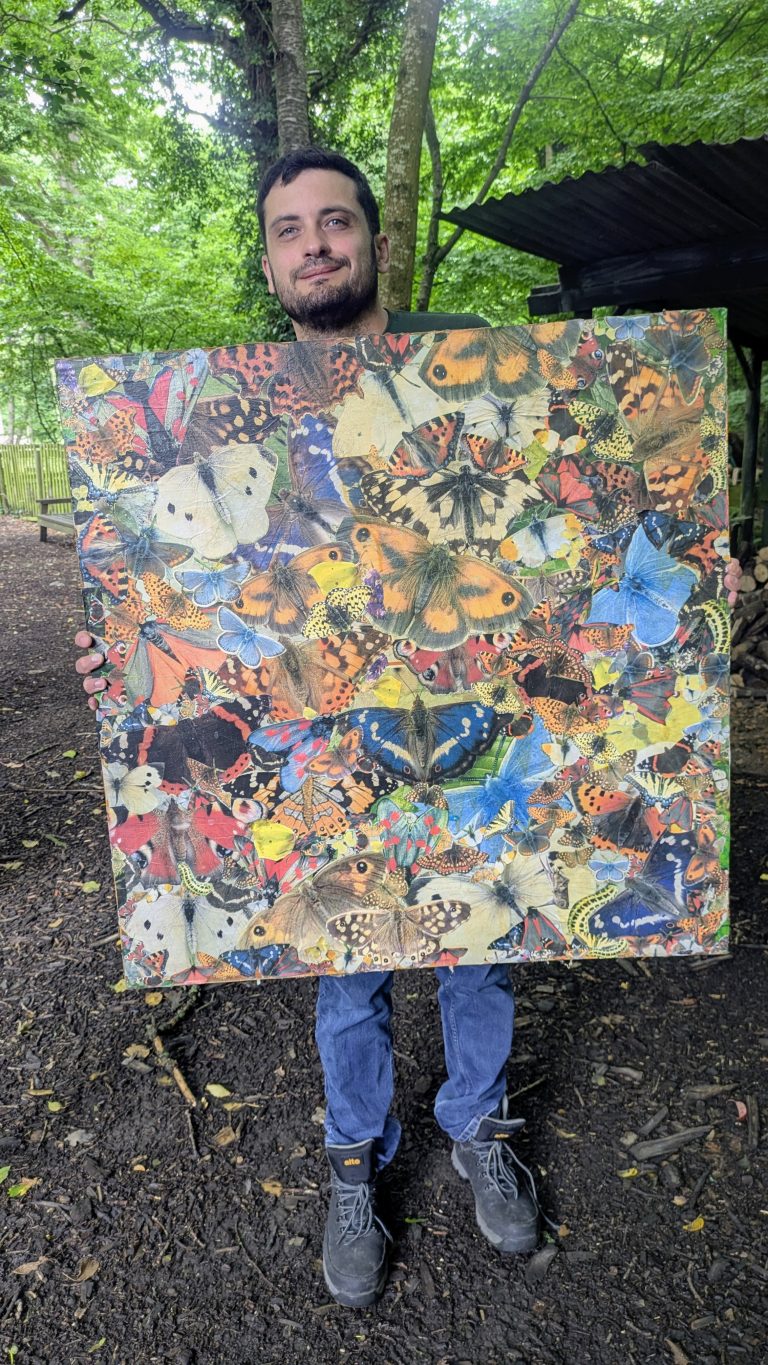
As part of a creative butterfly project linked to the Big Butterfly Count, a few years ago our Life Skills students each selected a native butterfly species to research. They then illustrated their chosen butterfly and painted it onto a wooden shape. The finished artwork, combined with recycled research materials, now forms a beautiful collage displayed on one of our window boards and refreshed each year for our butterfly focussed week.
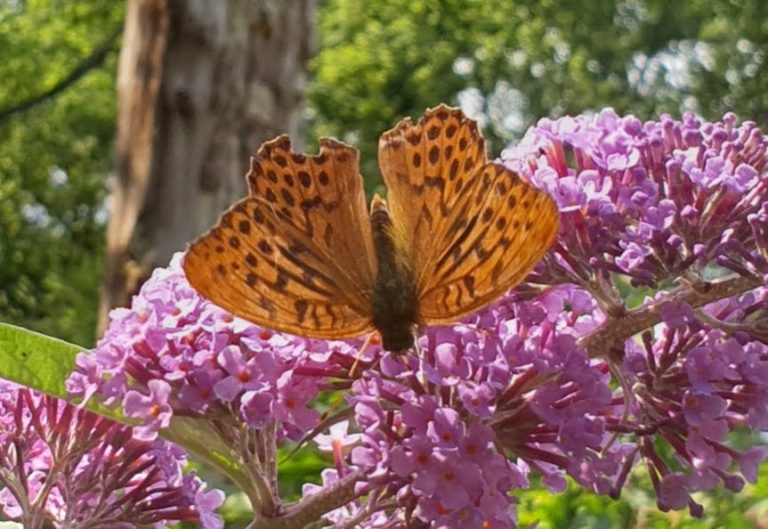
Below is a Silver-washed Fritillary, a striking species whose caterpillars feed on common dog violets and thrive in newly coppiced areas.
This butterfly was recently spotted in the Poulton Wood garden—an encouraging sign, especially considering the students’ and rangers’ dedication to maintaining and coppicing the habitat. Sadly, this species is in sharp decline across the UK due to habitat loss, so this sighting is a promising result of conservation efforts, particularly our students’ hard work coppicing.
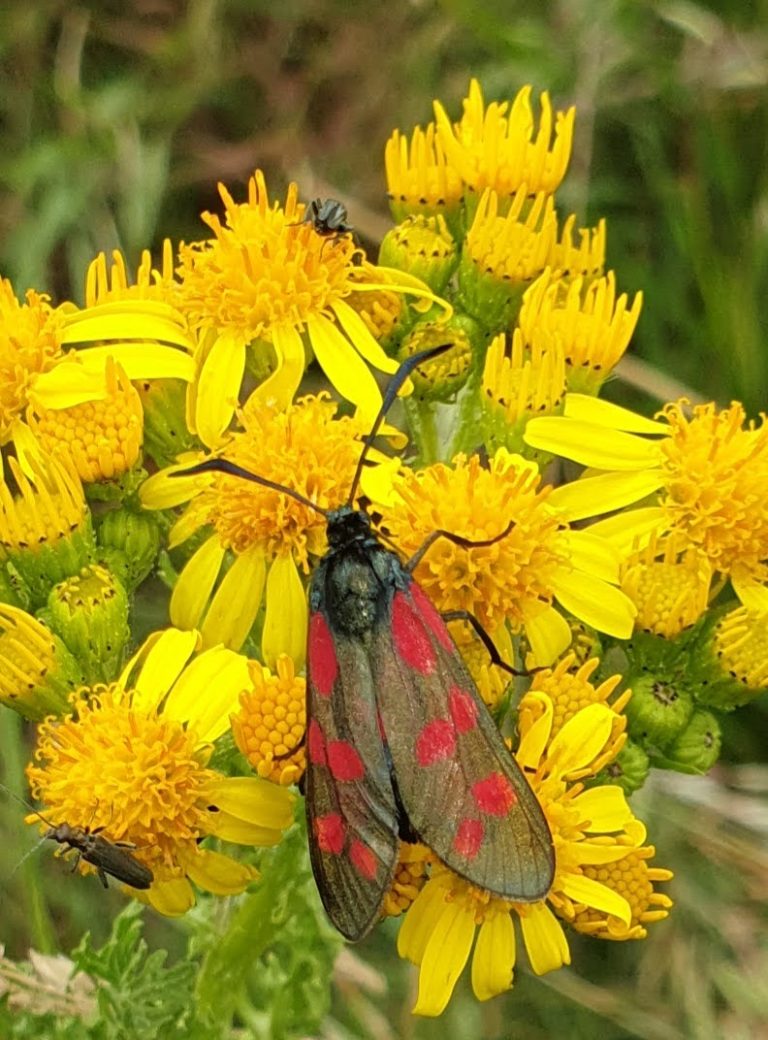
Below is the striking Six-spot Burnet Moth, easily recognized by its bright red spots.
This moth is often found on ragwort, a plant sometimes unfairly criticized. But actually, ragwort plays a vital role for many caterpillars, butterflies, and moths. Its presence supports a rich web of wildlife, making it an important part of the ecosystem.
Part of our ongoing conservation efforts
The Big Butterfly Count at Poulton Wood is more than just a survey exercise, it’s a hands-on opportunity for learning and conservation. With the ongoing work of rangers and volunteers, Poulton Wood continues to be a great place to spot butterflies and other vital pollinators. We’re excited to see what the rest of the surveys tell us!
Love butterflies? Use the links below to participate in the Big Butterfly Count. You can also visit our butterfly tunnel on the farm to see and learn more about native and tropical butterflies, and you can learn more about our conservation efforts at Poulton Wood and the Rare Breeds Centre.
You can help contribute to the Big Butterfly Count too!
Feeling inspired? It’s easy to take part and helps scientists track how butterfly numbers are changing across the UK.
If you’d like to get involved, visit: